
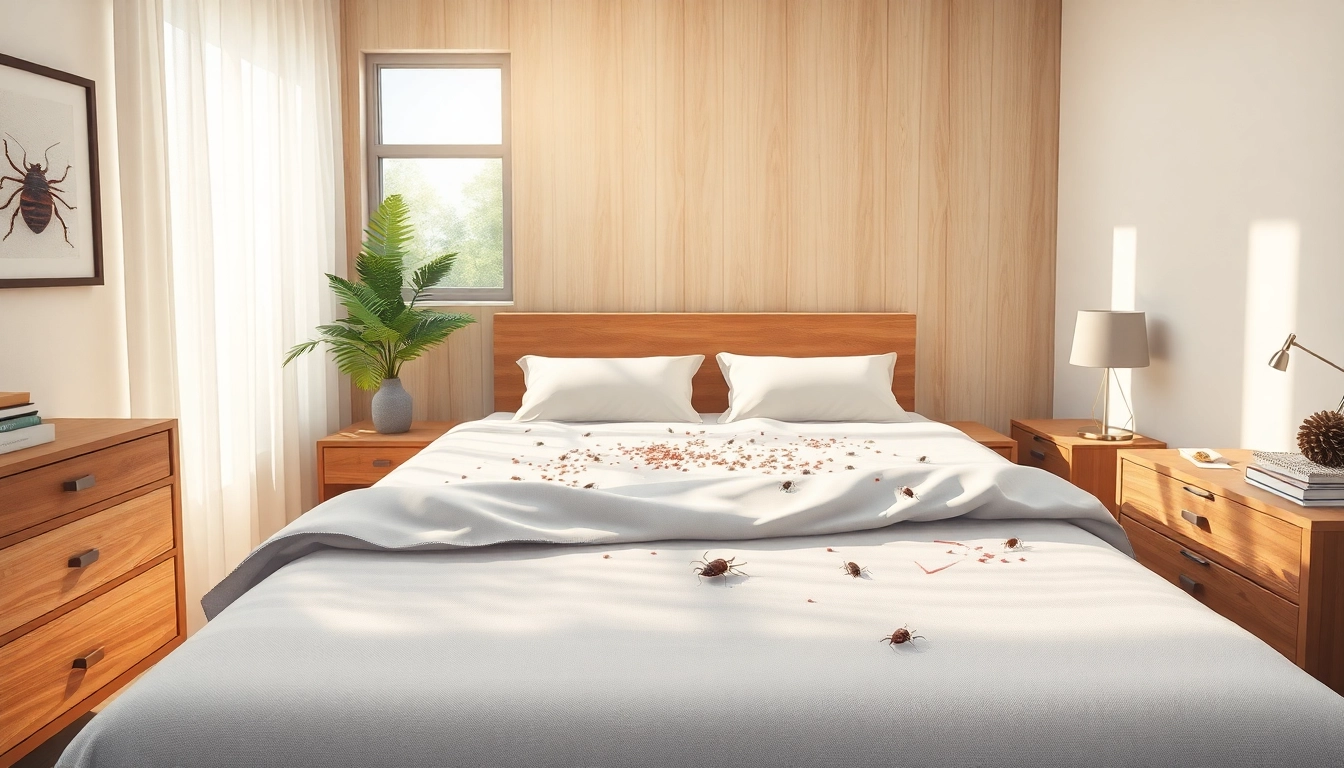
Understanding Bed Bug Infestations
What Are Bed Bugs?
Bed bugs are small, nocturnal insects that feed on the blood of humans and animals. They belong to the Cimicidae family and can range in size from 1 to 7 millimeters, making them difficult to spot. Their flat bodies allow them to hide easily in crevices and folds of bedding, furniture, and walls, which contributes to their rapid spread in infested areas. These pests are notorious for their resilience to various treatment methods, making their management a significant challenge.
Signs of Bed Bug Presence
To effectively manage an infestation, it’s essential to recognize the signs of bed bugs. Common indicators include:
- Itchy Bites: Small, red, itchy welts appearing on the skin, often in clusters or a line.
- Blood Stains: Tiny blood spots on sheets or pillowcases, typically resulting from crushed bugs after feeding.
- Fecal Marks: Reddish-brown stains on bedding or walls, which are their excrement.
- Eggs and Shells: Tiny, white, oval eggs that can be found in hiding spots; shed skins that appear translucent.
The Life Cycle of Bed Bugs
Bed bugs go through several life stages: egg, nymph, and adult. An adult female can lay approximately 5 to 7 eggs per day, resulting in a rapid population increase. The development from egg to adult can take as little as one month, depending on environmental conditions. Understanding their life cycle is crucial for developing effective strategies for bed bug removal.
Challenges in Bed Bug Removal
Common Misconceptions
Many people think bed bug infestations are solely due to poor hygiene or clutter. However, these pests can infest any living space, including clean, well-kept homes. Misconceptions can lead to ineffective treatments and prolonged suffering for those affected.
Impact of Delays in Treatment
Delaying removal measures can lead to the rapid growth of an infestation, making it increasingly difficult and costly to address. Bed bugs breed quickly, and each surviving female can produce numerous offspring, exponentially increasing the number of bed bugs in a short time.
Environmental Considerations
Despite the temptation to use harsh chemicals for immediate effect, it's essential to consider environmentally safe options. Many conventional pesticides can be harmful to humans, pets, and the environment. Choosing sustainable treatment approaches ensures safety while effectively managing bed bug populations.
Bed Bug Removal Techniques
Professional Bed Bug Removal Services
Engaging a professional pest control service is often the most effective means of achieving complete bed bug removal. Experts use a combination of methods, including chemical treatments, heat applications, and vacuuming. Significantly, professionals can access more potent treatments and possess the expertise to locate and eliminate bed bugs effectively.
Do-It-Yourself Solutions
For those who prefer to tackle infestations independently, do-it-yourself methods can be effective, particularly in early stages of infestation. Tools include:
- Diatomaceous Earth: A natural powder that damages the exoskeletons of bed bugs, effectively desiccating them.
- Steam Cleaning: High temperatures can kill bed bugs in all life stages.
- Encasements: Mattress covers designed to trap bed bugs and prevent them from escaping.
Natural Remedies for Bed Bug Removal
Natural remedies are gaining popularity for those who prefer chemical-free solutions. Examples include:
- Essential Oils: Oils like tea tree and lavender have insect-repelling properties that can deter bed bugs.
- Heat Treatments: Washing contaminated items in hot water or placing them in a dryer on high heat can effectively kill bed bugs and their eggs.
- Freezing: Subjecting items to freezing temperatures for a few days can also eliminate these pests.
Post-Treatment Measures
Preventing Future Infestations
Following successful treatment, it's vital to implement preventative strategies to avoid future infestations. This includes regularly inspecting sleeping areas, promptly addressing signs of new infestations, and educating occupants about the importance of vigilance.
Cleaning and Maintenance Tips
Regular cleaning can significantly reduce the risk of re-infestation. Consider vacuuming frequently, using a brush to remove bed bugs from seams and crevices, and washing bedding weekly. Furthermore, ensuring that all household members follow these practices can enhance overall prevention efforts.
Monitoring for Recurrence
Once treatment is complete, continuous monitoring is essential to catch any sign of recurring infestations early. Use bed bug interceptors beneath furniture legs to capture any wandering bugs and regularly check for new bites or stains, which can signify a return of the infestation.
FAQs on Bed Bug Removal
What is the cost of bed bug removal?
The cost of bed bug removal can vary widely based on the severity of the infestation, treatment methods, and the size of the property. On average, homeowners may expect costs ranging from $300 to $1,500.
How long does bed bug removal take?
The duration for effective bed bug removal can differ based on the treatment approach and infestation level. Generally, professional treatments may require several visits over a few weeks to ensure complete eradication.
Are bed bugs harmful to health?
While bed bugs do not transmit diseases, their bites can cause severe itching and allergic reactions in some individuals, leading to secondary infections if scratching occurs.
Can I get rid of bed bugs on my own?
Yes, bed bugs can be eliminated through DIY methods, but it may require significant effort and diligence. Early detection and a comprehensive approach are critical for success.
What are signs of a bed bug bite?
Bed bug bites typically manifest as small, red, itchy welts on the skin. These bites often appear in clusters or a straight line and may cause discomfort and inflammation.